
Simplifying the NDIS support list may not make the decisions simpler
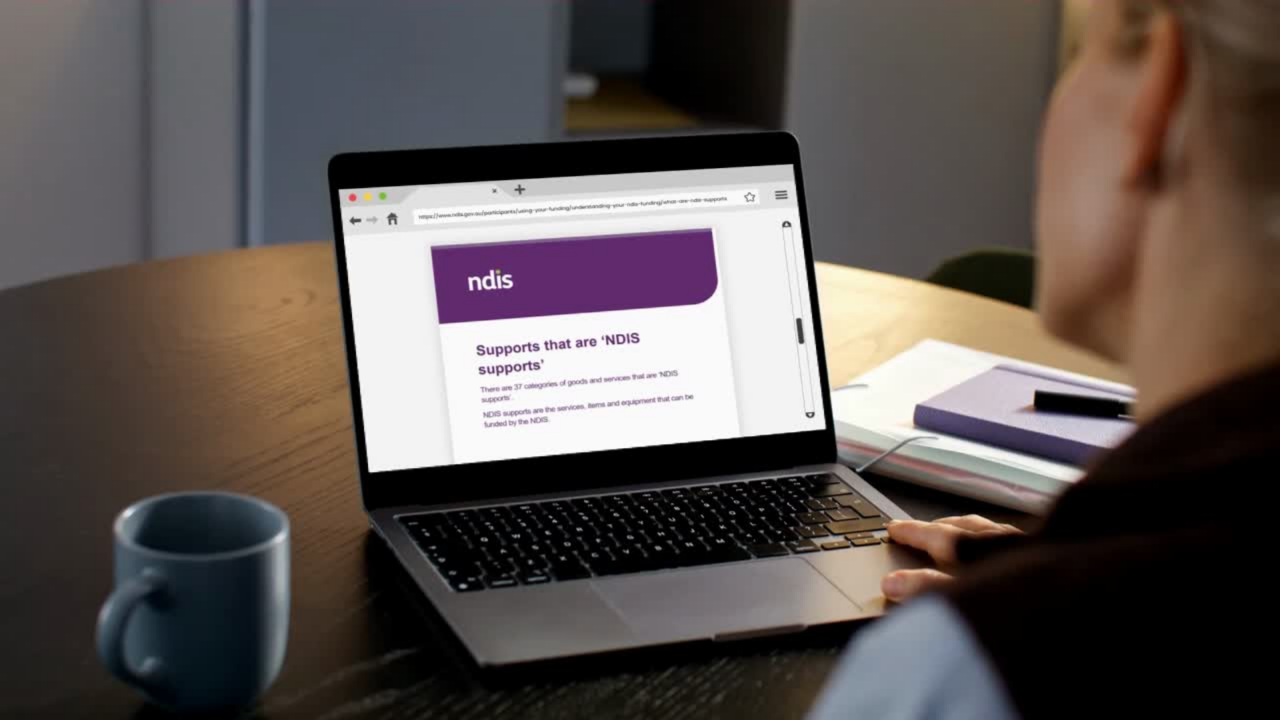
The NDIS support lists could be changing again. But before we get into what is being proposed, there is one important point to make clear.
These changes have not been decided.
The Australian Government has opened consultation on new framework planning and proposed updates to the NDIS Supports Transitional Rule. It is seeking feedback from people with disability, families, carers, providers, health professionals and others across the disability sector before the new rules are finalised.
The consultation opened on 19 August 2026 and closes on 14 October 2026. More info here: https://consultations.health.gov.au/disability-and-carers-group/nfp-ndis-supports/
Among the proposals being considered are reducing 36 support categories to 18, using broader purpose-based descriptions, changing how some commonly requested technology is treated and removing the replacement supports process.
I’ll admit, there are parts of what is being proposed that I really like.
When I compared some of the current and proposed definitions side by side, my first reaction was that some are genuinely easier to understand.
But the longer I looked at the proposed changes, the more I wondered whether we might be simplifying the categories without necessarily simplifying the decisions that sit underneath them.
Some of the proposed definitions are clearer
There are some good examples of where the proposed wording could remove ambiguity.
For home modifications, the proposed definition more clearly includes the design, planning, implementation and review of modifications. It also includes maintenance and repair of disability-specific fixtures and modifications.
The proposed therapy supports definition is clearer too. It includes assessment by allied health professionals for support planning and review, as well as assessment, prescription, implementation, adjustment and training in the use of assistive technology where required to support functional outcomes.
Assistive technology is another area proposed for consolidation. Instead of numerous separate overarching categories, the proposal uses broader categories such as assistive technology assets and assistive technology other.
On the surface, that feels simpler.
But there is still considerable detail sitting underneath those categories depending on the type and purpose of the assistive technology. So while the proposal may reduce the number of overarching categories from 36 to 18, that does not necessarily mean we are moving to 18 simple definitions.
And importantly, these remain proposed definitions while consultation is underway.
Replacement supports could disappear
One of the most significant proposals is the removal of the replacement supports process.
The consultation identifies tablets, smartphones, smartwatches and accessibility and communication apps among the most commonly requested replacement supports. The proposal is that these types of supports could instead be included as stated supports where they meet the relevant requirements.
There is an argument for that being clearer. If a device has a genuine disability-related communication or functional purpose, having an established pathway for it could remove some of the confusion we have experienced.
But what happens to the other mainstream products currently considered through replacement supports?
That is where I think this gets much more complicated.
Mainstream does not always mean unrelated to disability
A robotic vacuum cleaner is a good example.
Under the current replacement supports process, standard commercially available household items can, in certain circumstances, be considered where they address needs arising from a participant’s impairment, increase whole-task independence and reduce or eliminate the need for a support worker or disability-specific assistive technology.
For someone who cannot independently vacuum their home because of their functional limitations, a robotic vacuum may reduce the support worker assistance they require to complete that task.
It is a mainstream household product. But the reason it is being considered is directly related to the person’s functional needs and their ability to manage an everyday activity more independently.
This is exactly why I think we need to pay close attention to what happens if the replacement supports process is removed.
As OTs, we know that the best solution is not always the product with ‘disability’ attached to its name.
Sometimes a mainstream product can be a practical and cost-effective way of addressing a very specific functional barrier.
If replacement supports disappear, we need to understand what pathway, if any, will remain for those recommendations.
What is excluded matters just as much as what is included
There are also several products and services the consultation identifies as having caused confusion or disputes about whether they are NDIS supports.
The proposal is to specifically exclude them. The examples include electronic noise-cancelling headphones, fencing and gates, hairstyling tools, hydrogen fuel and electric vehicle charging costs and scuba therapy.
Again, these are proposed exclusions, not changes that have already taken effect.
But there is a broader issue here.
If we are being asked to consider whether the proposed funded support categories are appropriate, I think we also need to understand what will sit on the excluded list.
A broad definition might appear to accommodate a particular support. If that same product is specifically excluded elsewhere, however, the broader definition becomes irrelevant.
Without seeing the complete picture, it is difficult to understand what these changes will actually mean in practice.
This is the opportunity to have a say
The purpose of this consultation is to gather feedback before the rules are finalised.
And I think there is an important role for OTs in that process.
We see the situations that do not fit neatly into a category. We see when an everyday product becomes an assistive solution because of how a person uses it. We see how different definitions work when applied to actual functional needs rather than when they are sitting on a page.
That experience can help identify unintended consequences before proposed rules become established practice.
The Government is accepting written submissions, responses to the consultation questions, video responses and feedback by phone or email.
The consultation closes on 14 October 2026. The Government has also advised that exposure drafts of all eight new framework planning rules will be released for information and further consultation later this year. These will show the proposed wording of the new rules before they are finalised.
If you work within the NDIS, I would encourage you to look through the consultation material and consider providing feedback while there is still an opportunity to influence what the final rules look like.
Have your say: New Framework Planning and NDIS Supports Consultation
Simplifying the support list could be a positive step.
But this is exactly why consultation matters. Before the new rules are finalised, we have an opportunity to make sure that fewer categories actually create greater clarity without losing the flexibility needed to respond to real functional needs.
Want more practical OT updates?
Subscribe to the Verve OT Learning newsletter and have the latest delivered straight to your inbox each Monday.
