
Making sense of the high support needs safeguard
Sep 24, 2026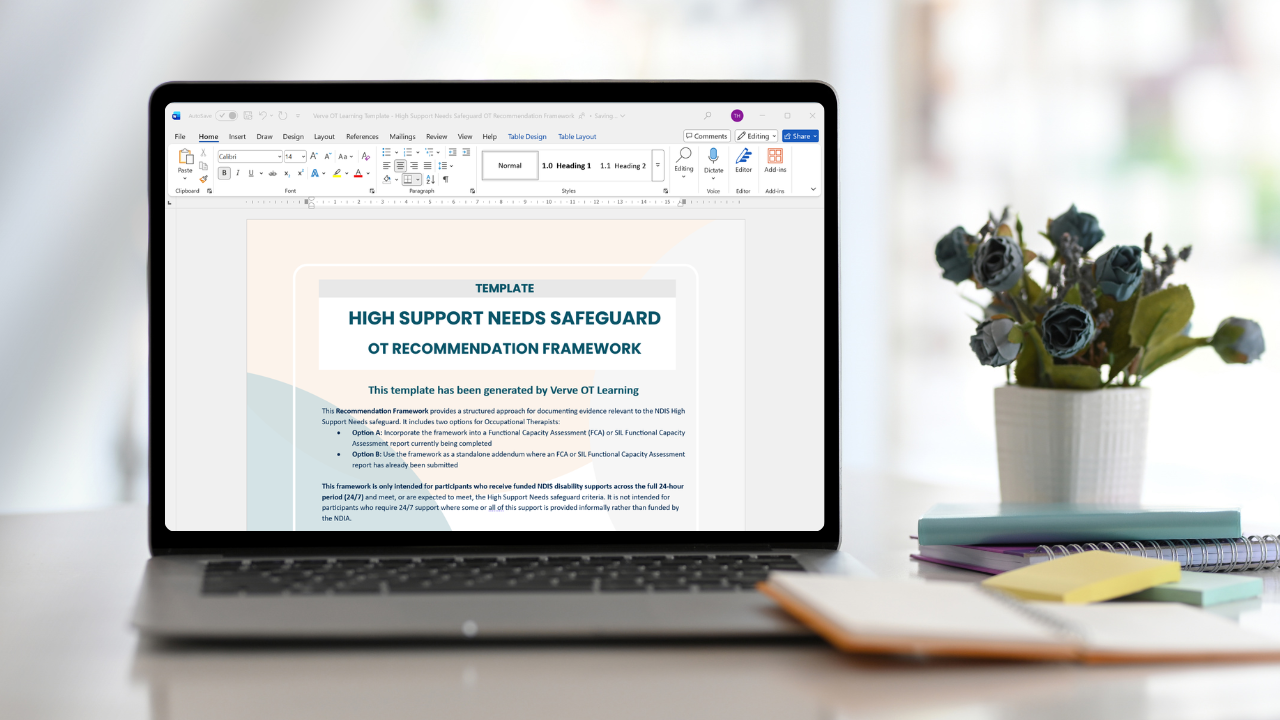
It’s been a busy couple of days for NDIS updates.
On Tuesday, the government released new guidance about the High Support Needs safeguard that will sit alongside the funding changes commencing from 1 October
Then on Wednesday, we received a much broader update explaining how the funding reset will be rolled out, which supports will be protected and how the different safeguards will operate.
This article was published on 24th September 2026. So as I said...big week!
The first thing I want to clarify is that Wednesday’s information doesn’t undo what we learned on Tuesday. The two releases are largely consistent. Wednesday simply gives us more of the surrounding detail.
There are a few things I think OTs need to understand.
The funding reset isn't happening to everyone on 1 October
This is probably the biggest clarification from Wednesday.
From 1 October 2026, the funding changes begin to apply when:
-
a new participant plan is created
-
a participant's plan is reassessed
The participant will be told how much their affected funding has been reduced when they receive that plan and the change takes effect when the plan commences.
Then, from 1 February 2027, the changes also begin to apply to plan renewals.
Affected participants who haven't had a new or reassessed plan since 1 October will have their plan renewed by 30 September 2027. The NDIA will contact participants before this occurs and no additional information is required for the funding reset itself.
So we're looking at a progressive rollout, not everybody waking up on 1 October with their existing plan suddenly reduced.
For us as OTs, that means the timing of someone's next plan, reassessment or renewal is going to matter.
What is actually being reduced?
The reset affects funding for:
Social, Economic and Community Participation: 50% reduction to affected funding
Improved Daily Living Skills: 10% reduction to affected funding
There are exclusions. Supports including high intensity supports, disability-related health supports and intensive and complex behaviour supports are among those protected from the reset.
The NDIA will use plan and payment information to identify excluded supports rather than requiring participants to submit additional information.
The High Support Needs safeguard is very specific
This is where Tuesday's update matters.
The new High Support Needs pathway isn't a general safeguard for everyone whose funding is reduced.
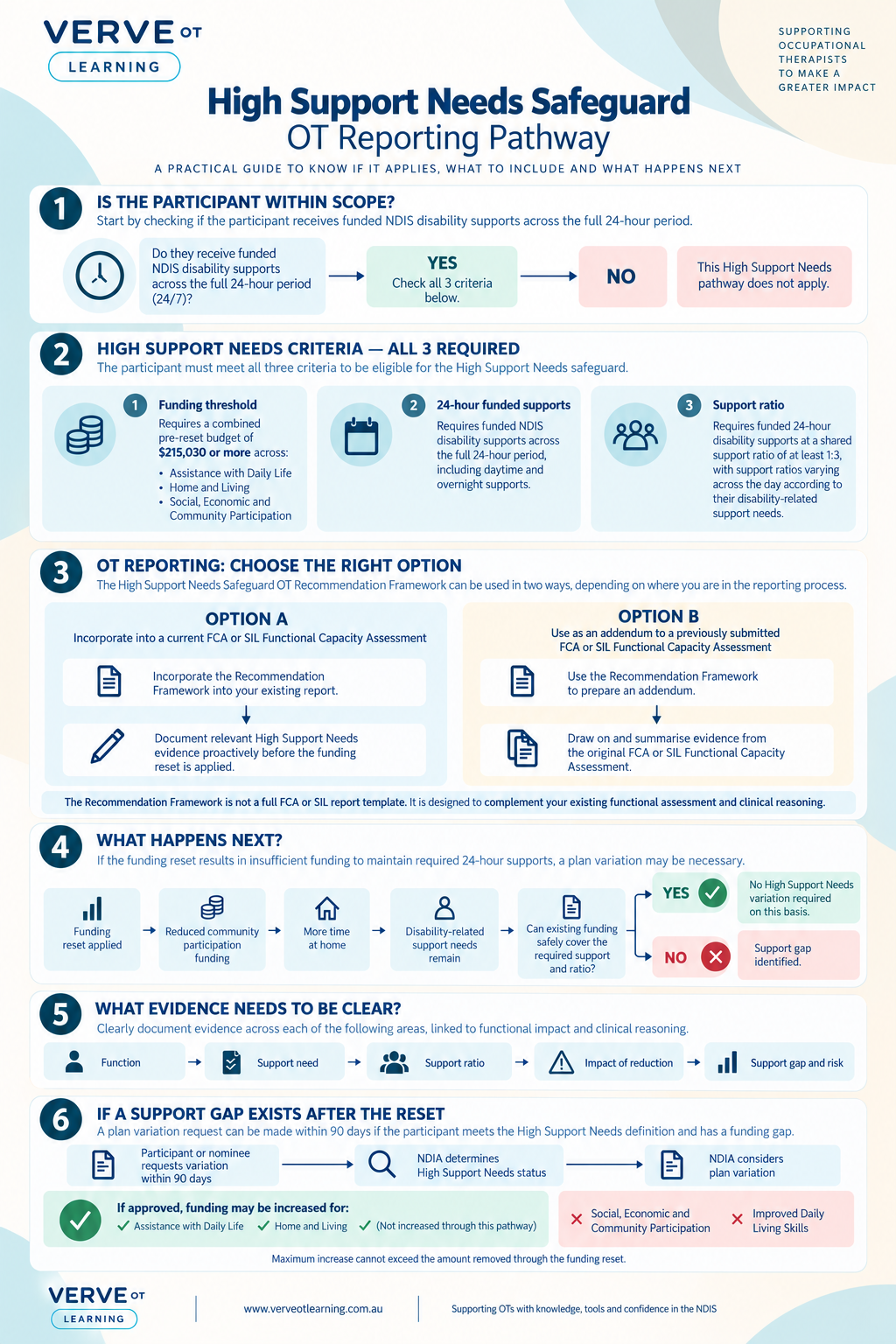
To meet the High Support Needs definition, a participant must meet all three criteria:
-
Have a combined pre-reset budget of at least $215,030 across Assistance with Daily Life, Home and Living and Social, Economic and Community Participation
-
Receive funded NDIS disability supports across the full 24-hour period
-
Receive those 24-hour supports at a shared support ratio of at least 1:3
That second criterion is the one I really want OTs to notice.
This isn't simply about whether someone needs 24/7 support.
They need to be receiving funded NDIS disability support across the full 24-hour period. If family or other informal supports are filling significant gaps in that 24-hour period, this particular safeguard isn't the pathway for them.
But what about people whose 24/7 support needs are being met by family?
This is the part I find particularly frustrating and disappointing.
There will be participants who need disability support across the full 24-hour period, but don't meet the High Support Needs definition because parents, partners or other informal supports are currently filling some of those hours.
Their disability-related support needs don't disappear because their family is providing the support. Yet they won't have access to this particular safeguard and their affected Social, Economic and Community Participation funding may still be subject to the 50% reduction. The funding reduction itself is not currently a reviewable decision.
There is, however, an important opportunity ahead. The legislative instrument establishing this pathway and its criteria will be disallowable, meaning it can be scrutinised by Parliament.
For me, that makes advocacy particularly important. We need to make visible what these criteria could mean for participants whose families are already carrying a substantial amount of unpaid support, and the additional pressure a funding reduction could place on those informal supports.
As OTs, we can contribute by clearly evidencing what support is actually required across 24 hours, what is funded, what is currently being provided informally and what the impact would be if informal supports were expected to absorb more.
Meeting the criteria still isn't enough
Even if a participant meets all three criteria, a plan variation isn't automatic.
The funding reset must actually leave them with insufficient funding to maintain their safe 24-hour disability supports at the support ratio they require.
This is where I think our OT evidence becomes particularly important.
I keep coming back to this pathway:
FUNCTION → SUPPORT NEED → SUPPORT RATIO → IMPACT OF REDUCTION → SUPPORT GAP + RISK
If community participation funding reduces and the participant consequently spends another two hours at home each day, their disability-related support needs don't disappear.
What support do they need during those two hours?
At what ratio?
Can their existing Assistance with Daily Life or Home and Living funding cover it?
And if not, what happens?
That's the gap we need to be able to demonstrate.
Don't wait for the reduction to think about your evidence
This is probably my biggest takeaway for OTs completing FCAs and SIL assessments now.
The actual High Support Needs variation can't be requested until the funding reset has been applied. The participant or their nominee then has 90 days to request the variation, with extensions possible in exceptional circumstances.
But that doesn't mean we need to wait until then to get the evidence right.
If I'm completing an FCA or SIL Functional Capacity Assessment now for someone who meets, or is expected to meet, these criteria, I want their 24-hour support needs and required support ratios clearly evidenced in that assessment from the outset.
If the report has already been submitted, an addendum can be used to draw together the relevant evidence from the original assessment.
The key is that we're not simply saying this person needs 24/7 support.
We're demonstrating why, when, at what ratio and what happens if that support isn't available.
One final distinction
If a High Support Needs variation is approved, the NDIA isn't simply restoring the participant's reduced community participation funding.
Additional funding can be provided through Assistance with Daily Life or Home and Living to address the identified gap in 24-hour supports.
It can't be added back to Social, Economic and Community Participation or Improved Daily Living Skills through this particular pathway and the increase can't exceed the amount removed through the funding reset.
That tells us something important about how we frame our evidence.
The question isn't simply:
“How much community participation funding has this participant lost?”
It's:
“What gap does that reduction create in the participant's required 24-hour disability supports?”
For me, that's where our OT assessments need to focus as these changes start rolling out.
And given how quickly the detail has developed just this week, I'll continue watching the guidance closely as we get closer to 1 October.
If your head is spinning, here's an overview of the updates and what we need to be considering and actioning as OTs:
Need a practical way to document this in your OT reporting?
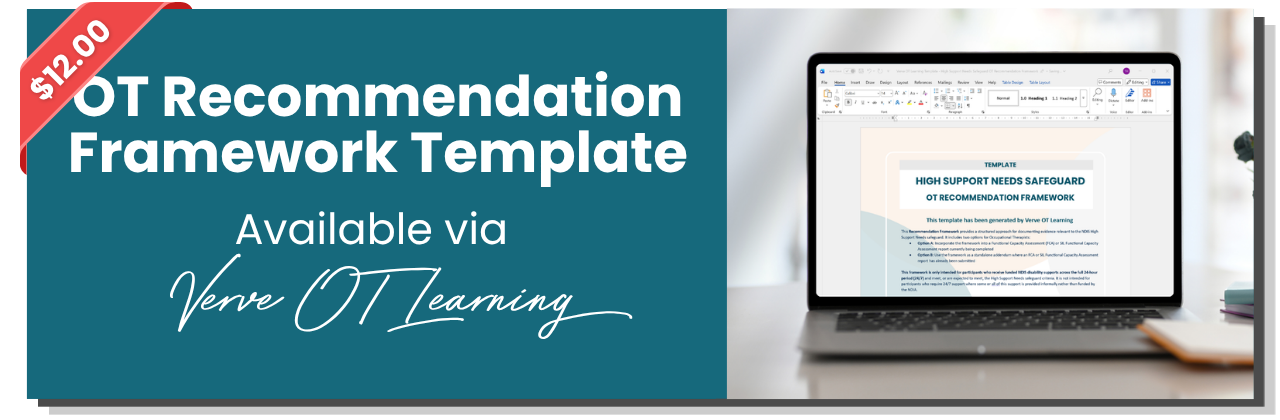
I’ve developed the High Support Needs Safeguard OT Recommendation Framework to help OTs clearly structure the evidence relevant to this pathway.
This is not a full FCA or SIL report template. It’s an editable Word framework designed to complement your existing assessment and reporting, with two options:
Option A: Incorporate the framework into an FCA or SIL Functional Capacity Assessment you’re currently completing
Option B: Use the framework to prepare an addendum where the FCA or SIL Functional Capacity Assessment has already been submitted
It includes structured prompts to help you document how the participant meets the High Support Needs criteria, their 24-hour funded support arrangements, required support ratios, the impact of the funding reduction and the resulting support gap and risks.
The framework is available individually through Verve OT Learning for $12.00 or is included for Inner Circle members.
Want more practical OT updates?
Subscribe to the Verve OT Learning newsletter and have the latest delivered straight to your inbox each Monday.
