
There’s a gap in the new NDIS safeguard we need to talk about
Sep 28, 2026
Last week, I shared some information on Facebook about the new High Support Needs safeguard being introduced alongside the NDIS funding changes.
A mother of a former client commented. Her son has a meaningful life. He is mostly calm and happy. If his community participation funding is reduced, she fears he will spend more weekdays at home, become unhappy and experience a return of behaviours of concern.
For her, there is another consequence. She may have to leave work to provide the support he needs, with significant financial consequences for their family and an impact on her own wellbeing.
This is exactly the group of participants I have not been able to stop thinking about.
Needing 24-hour support is not the same as having it funded
From 1 October, new funding arrangements will begin affecting the amount some participants can access for social, economic and community participation supports and improved daily living skills.
The NDIS Amendment (Securing the NDIS for Future Generations) Act 2026 introduced a new mechanism called a ‘support determination’. Put simply, a support determination allows the amount of funding available for certain types of supports to be reduced by a set percentage, even after the NDIA has determined the amount of support that is reasonable and necessary.
The two areas affected by the new funding reductions are social, economic and community participation and improved daily living skills. Under the new arrangements, the amount available for social, economic and community participation supports will be reduced by 50%, while improved daily living skills supports will be reduced by 10%. There are exclusions for some supports within these categories, including high intensity supports, disability-related health supports and intensive and complex behaviour supports.
The changes will be introduced progressively as plans are created, reassessed or renewed. They do not mean every affected participant will have their funding reduced on 1 October.
Importantly, the reduction is applied after the NDIA determines the amount of support that is reasonable and necessary. For example, if $40,000 of social, economic and community participation support is determined to be reasonable and necessary, a 50% support determination would mean only $20,000 is available for the participant to spend on those supports.
And this is where the new safeguard becomes particularly important.
A new plan variation pathway has been created for participants with high support needs whose funding reduction leaves them without sufficient funding to safely maintain their 24-hour disability supports. But there is a really important detail in the eligibility criteria: the participant must already receive 24-hour funded NDIS supports.
My immediate question was: what about the people who require 24-hour support but do not currently have all 24 hours funded by the NDIS?
I can think of participants who live with their parents and cannot safely be left alone. Support workers might come in for personal care in the morning, then the participant attends a day program. They come home, perhaps receive some additional formal support and Mum or Dad takes over for the evening and overnight.
Their support need does not stop when the support worker leaves. It is simply being met by someone who is not being paid by the NDIS.
So what happens when those funded hours are reduced?
This is where I am struggling with the logic of the safeguard.
If that participant’s community participation funding is reduced, they may have fewer funded hours available to attend their day program or access the community. But because their parents have been providing the remaining support, they may not meet the requirement for 24-hour funded NDIS supports and therefore may not be eligible for this particular variation pathway.
The guidance indicates that participants outside the safeguard can still request a variation or unscheduled plan reassessment where there has been a significant and ongoing change in their circumstances, support needs or functional capacity. But that is precisely the problem. Nothing about the participant’s functional capacity has changed and nothing about the amount of support they require has changed. What has changed is the funding available to meet that need.
And someone still has to fill the gap.
When I first read the guidance, my reaction was disbelief. I genuinely wondered how this group of participants could have been overlooked.
Then another, more sinister thought entered my mind.
Could this ultimately push more people towards shared support and group living arrangements?
I want to be very clear here. The legislation and guidance do not state that this is the Government’s intention. I have not seen anything explicitly saying that these changes are designed to move participants towards group models. This is my interpretation of what the settings could incentivise in practice.
If a participant who lives with family and relies partly on informal support cannot access the safeguard, but someone receiving 24-hour funded support at a shared ratio can, what does that encourage over time? If community participation funding is reduced and families are expected to absorb more of the support at home, how long is that sustainable?
I am very concerned about where that could lead. If informal supports become exhausted or can no longer fill the gaps, the solution may eventually become a more formal, shared model of support. Not necessarily because that is what the participant or their family wants, but because the alternatives have become increasingly difficult to sustain.
I sincerely hope that is not where this takes us.
The safeguard doesn’t mean community participation funding is restored
There is another important distinction that came through in the comments on my post. One parent asked whether having 1:3 SIL support and a budget above the threshold meant their son would therefore not lose 50% of his community participation funding.
No. Meeting the High Support Needs criteria does not exempt a participant from the funding reduction.
Instead, it provides an eligible participant with a pathway to request a plan variation if the reduction means they no longer have enough funding to safely maintain their 24-hour disability supports. If that variation is approved, funding can be increased for assistance with daily living and home and living supports. It does not mean the lost funding is restored to social, economic and community participation.
That distinction matters. We are talking about maintaining the support a person needs when they are at home. We are not necessarily maintaining the life they previously had outside it.
And that brings me straight back to the mother who commented on my post. Her concern wasn’t simply that her son might lose funded hours. It was that he has a meaningful life now.
If he can no longer attend the activities that currently fill his weekdays, the alternative may be spending more time at home. She fears he will be unhappy, that behaviours of concern may return and that she may have to leave work to provide the support he still requires.
That is the human consequence we cannot lose sight of when we talk about moving funding from one support group to another.
This is what I want OTs to be thinking about
For me, this reinforces why our assessments need to distinguish between the support a participant receives and the support they require. Eight funded hours of support does not necessarily mean eight hours of support need.
We need to be documenting what happens across the whole day. Who provides support when formal services are not there? Can the participant safely be left alone? What would happen if informal support was unavailable? What is the impact on participation when funded hours are reduced?
Behind the words ‘24-hour funded NDIS supports’ are families who may already be filling substantial gaps. When funding is reduced, those needs do not disappear. Someone still has to provide that support.
And right now, I am deeply concerned that for some participants, the answer is going to be their families until their families simply cannot do it anymore.
Still figuring out what all of this means for your OT practice?
You’re certainly not alone.
Knowing what has changed in the NDIS is only part of the challenge. The bigger question is what these changes mean for the way we assess function, gather evidence, navigate NDIS processes, make recommendations and communicate support needs.
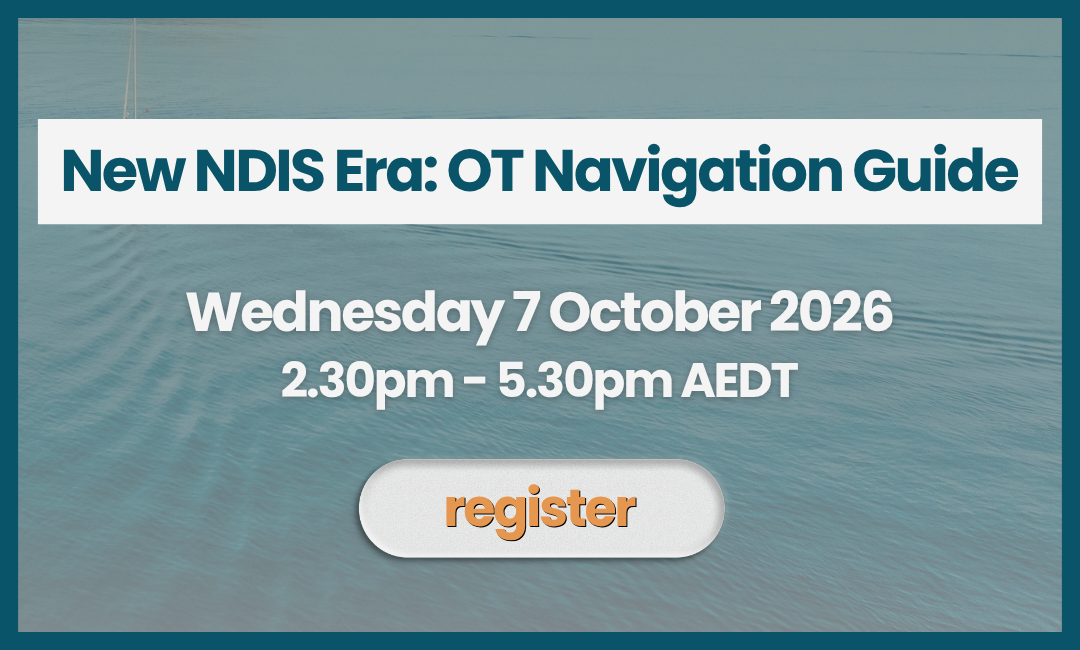
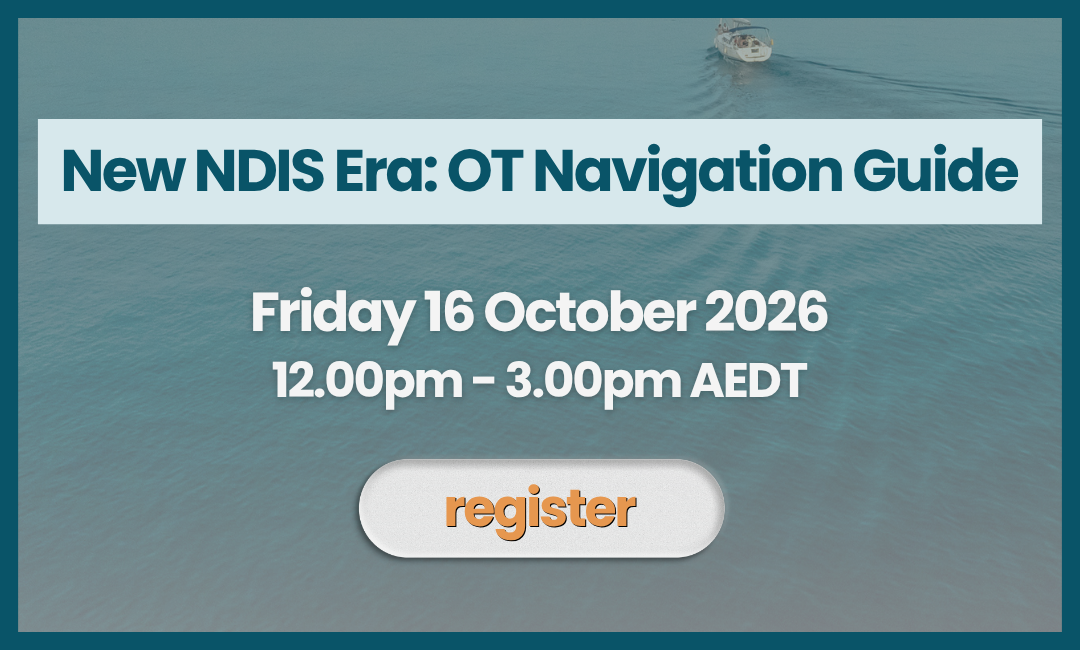
That’s exactly what I’ll be working through in my upcoming three-hour live workshop, New NDIS Era: OT Navigation Guide.
We’ll cover the reforms OTs need to understand, including Support Determinations, the High Support Needs pathway, plan changes, the NDIS Support Lists and changes to functional capacity and reasonable and necessary criteria. But we won’t stop at understanding the reforms.
We’ll spend the second part of the workshop looking at what we can actually do in response: strengthening functional assessment, gathering better evidence, making our clinical reasoning visible and writing clearer, more defensible recommendations.
There are two live dates to choose from, with the same workshop delivered on each date:
🔗 Wednesday 7 October 2026, 2.30pm – 5.30pm AEDT
🔗 Friday 16 October 2026, 12.00pm – 3.00pm AEDT
Both workshops will be recorded. So if you can't make it, no worries. You'll receive access to the recording, slides and resources within 24 hours.
If you’re feeling like there is a lot to get your head around right now, this workshop is designed to help you make sense of it and work out what it means for the OT work you’re doing every day.
Want more practical OT updates?
Subscribe to the Verve OT Learning newsletter and have the latest delivered straight to your inbox each Monday.
